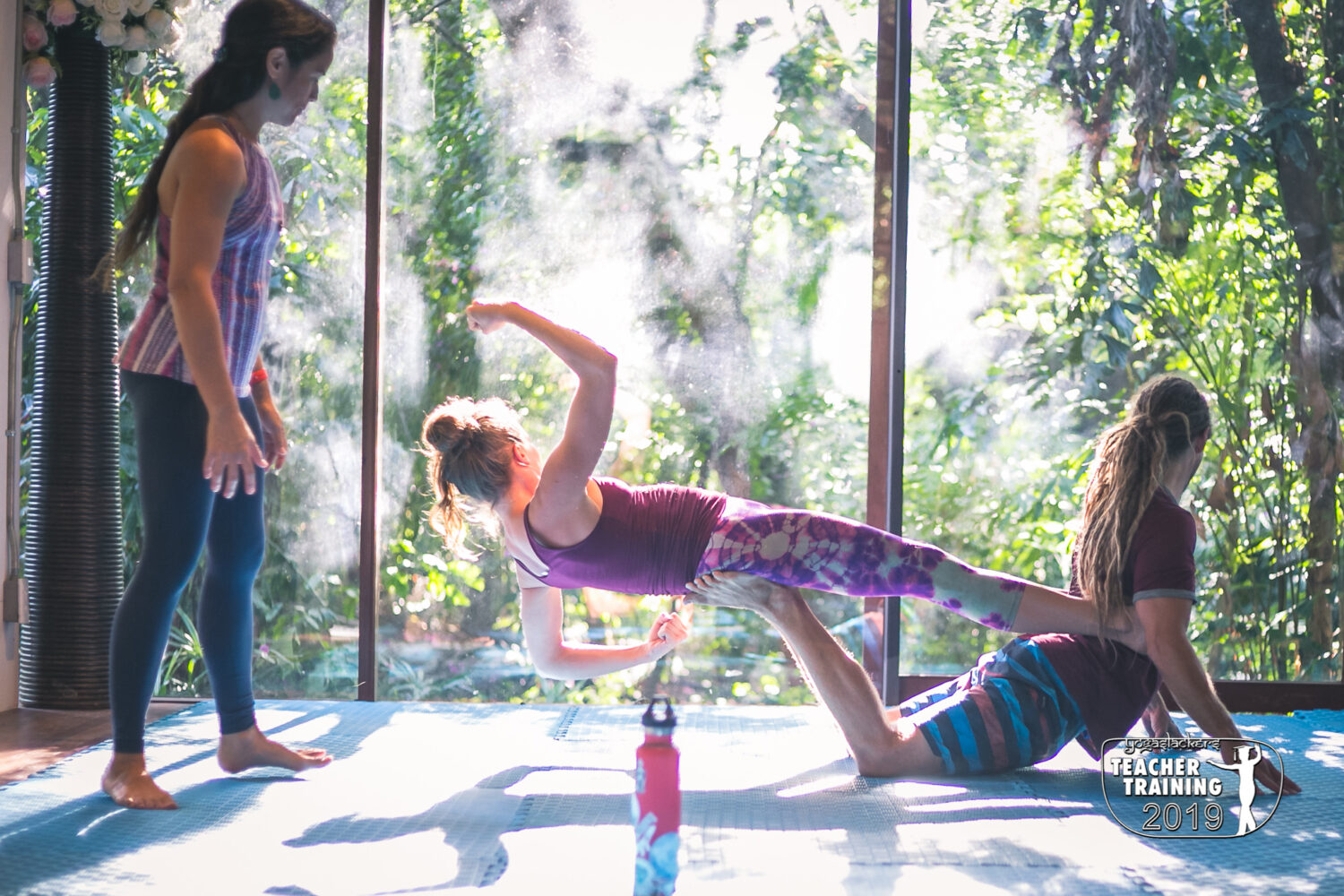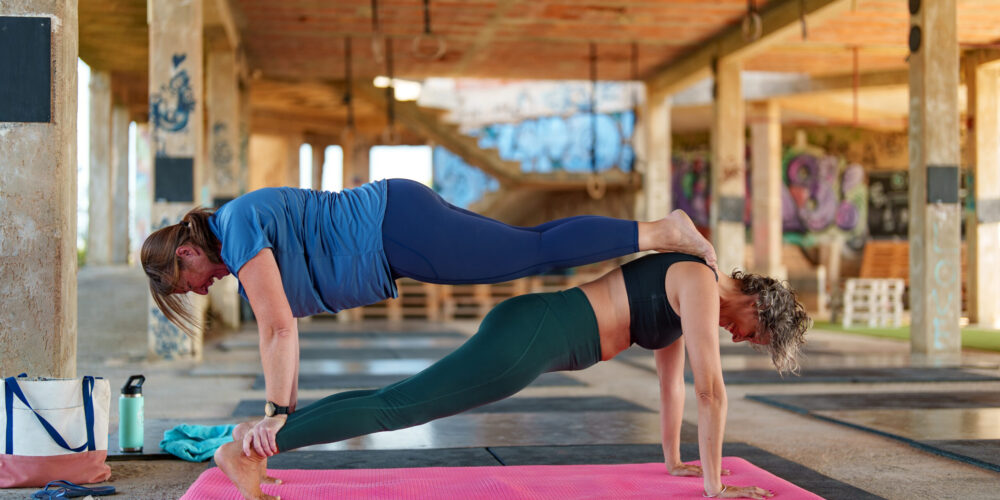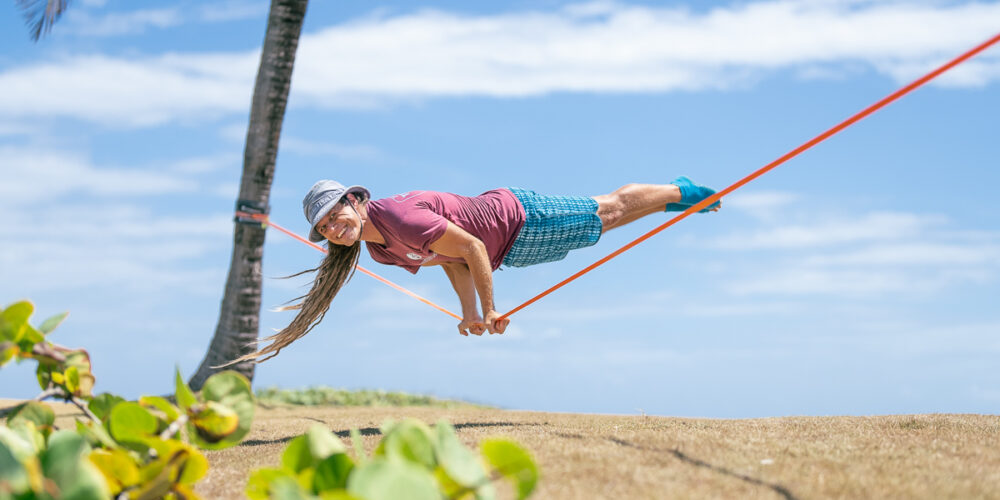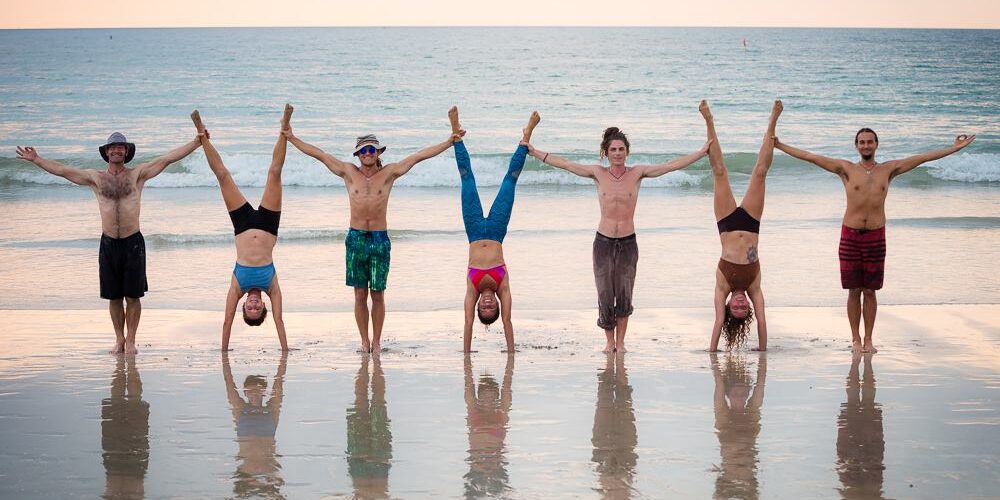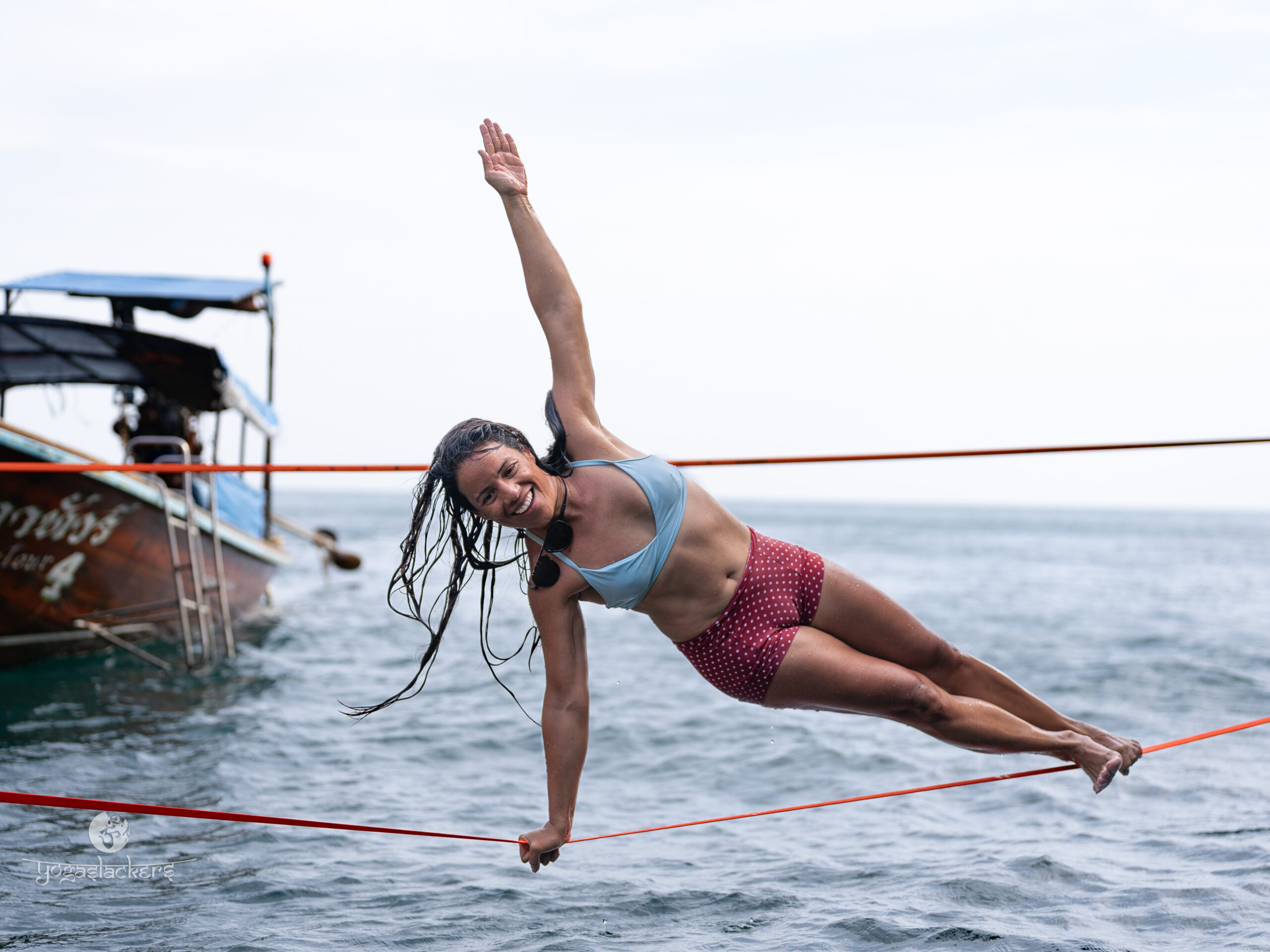

Acrobatics is defined as “the performance of extraordinary feats of balance, agility, and motor coordination.” When we view the definition through this lens, it becomes clear that many of our practices (yoga, slackline yoga, acroyoga, handstands, and even adventure sports such as climbing) can be categorized as acro.
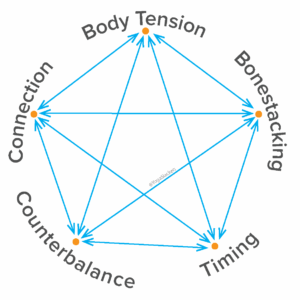
Realizing this, we started to look at what these disciplines have in common and how we could make them easier, safer, and more effective. From that exploration, we identified five key principles, what we now call the YogaSlackers’ Five Principles of Acrobatics.
In this blog, we’ll introduce these principles and show how they can bring more ease and clarity to your practice, while helping you progress steadily and safely. By understanding and applying these principles, practitioners at any level can foster growth, enjoyment, and a deeper connection to both body and mind.
Stay tuned, as we’ll dive into each principle next.
1) Body Tension
aka: Tight Is Light
The first principle is Body Tension, often summed up as “tight is light.” This principle teaches that balance and stability come from proper engagement of your body, not how much you weigh. There’s a common misconception that lighter flyers are easier to base in acro, but the real factor is how well someone can generate and maintain tension at the right time (and that applies to flyers and bases!).
Whether you’re working with a partner in acro or practicing solo in yoga, handstands, or slacklining, the key is to activate the right muscles to stabilize your joints and move as one unit. This doesn’t mean tensing everything; it means finding the right engagement in the areas that need to be stable. By learning to create and maintain that tension, you can gain control and improve efficiency in any practice.
2) Bone Stacking
The second principle is Bone Stacking. Let’s think about it in a basic way: one of the primary functions of bones is to support our body, while muscles are used to move those bones. In acrobatics, we aim to utilize the bones’ natural weight-bearing function as much as possible by aligning them to support our structure.
We achieve bone stacking by finding the correct alignment between the ground, the slackline, or a partner, and our bones, so they bear weight more efficiently. When bones are stacked, we reduce the need for muscular effort, making it easier to sustain poses or movements. You’ll know you’ve found good alignment when things feel stable, and you’re not straining to hold yourself up.
3) Counterbalance
The third principle is Counterbalance or a weight that balances another weight. Similar to bone stacking, we are constantly balancing and counterbalancing our body. Even the simple act of standing or walking is a counterbalancing act. In our practices, we use this skill, and the awareness of it, to help balance a pose on the ground (yoga), on a person (acroyoga), and on the slackline.
Counterbalance isn’t just a way to fix falling; it’s also how we create smooth, intentional transitions. If you consistently fall to one side of the line, or one side of your handstand, or one side in acro, it indicates a need to adjust and counterbalance in the opposite direction.
4) Timing
The fourth principle is Timing. Timing refers to the knowledge, choice, and control of when something needs to be done. While its application is most obvious in partnered work, it also applies to solo practices. Timing is the principle responsible for the fluidity of practice and the ease associated with smooth movements.
As Sam Salwei says, “Speed is an illusion created by fluidity. What we seek in acro isn’t speed, it’s fluid motion.” Fluidity comes from timing and the measured application of all the other principles we’ve covered.
Learning to tune into your timing will help you find ease in everything you do, whether it’s syncing with the slackline’s frequency, your breath or your acro partner’s timing.
5) Connection
The fifth principle is Connection. Connection involves how we relate physically, verbally, and emotionally, to ourselves, to others, and to the environment. Whether we are connecting to the ground in yoga, a slackline, or a partner in acro, the quality of these connections shapes our practice.
When we think about connection, we are called to remember the yogic principle of non-violence, or ahimsa, which is about being harmless to ourselves and others in every condition. We use this as a guiding principle to connect with kindness, softness, and ease.
a) Physical Connection
Physical connection refers to where and how we make contact with the ground, the slackline, or a partner. We want to maintain body tension so we are easier to balance while keeping soft contact points. Soft in the sense that they are comfortable, firm and responsive.
A simple way to improve your physical connection is to increase the surface area of the connection point, as this usually reduces sharp pressure points. That’s usually enough to create stable and pain-free contact points. And that matters because, if the contact point feels good, you’ll be able to hold the pose longer, practice longer and avoid injuries. And this could be the main difference between continuing to practice or not.
Use pain as a tool to inform your connection point. If you notice pain or persistent discomfort, pause and adjust. Change the location, soften the grip (firm, not crushing), release unnecessary tension, or add additional support where appropriate.
Above all, do not suffer through the practice. That’s not the goal.
b) Verbal Connection
Verbal communication is one of the most important skills we have. It’s not only what we say, but how we say it. Just like physical connection, if our words are harsh or abrasive, they create disconnection. Use each session to practice compassionate communication with yourself and others.
We lean on the spirit of Nonviolent Communication (NVC), prioritizing connection; making observations without judgment; sharing feelings and needs; and making clear, doable requests. (We’ll dive deeper into NVC in a separate post.)
In groups and in solo practice, celebrate what’s working and name what needs attention. Listen in, soften the edges, and choose words that support growth. Replace harsh commentary with clear, kind, and specific cues. Thoughtful verbal communication is a powerful skill for building a connected, safe, and effective learning environment. And like any other skill, it requires practice, repetition and a kind heart for whenever we make a mistake or two.
c) Emotional Connection
Emotional connection involves the internal sense of safety and trust that grows from our physical and verbal interactions, and how we relate to ourselves and each other. The safer we feel around one another, the stronger the emotional connection we build with ourselves, our partners, and the practice itself.
By maintaining stable and pleasant connection points (physical, verbal, and emotional) we aim to create a collaborative environment and foster a supportive internal and external atmosphere where everyone feels welcome, heard and respected regardless of their background, identity, or ability.
Integration
Integration Diagram
The YogaSlackers Five Principles of Acrobatics don’t exist in a vacuum, and aren’t meant to be applied one at a time. Instead, the practice is about integrating them all, using them together in unison.
Remembering these principles during practice is key, regardless of skill level. When you struggle with a pose – and everyone does at times – stop and consider which principles you might be overlooking. Dissect each pose to understand how each principle affects it will help you progress rapidly and safely.
Keep in mind that you can work on these principles using different poses or mediums. For example, stepping off the line and onto the ground can often help you understand how to apply the principles on solid ground, which you can then translate back to the slackline.
Once you grasp the YogaSlackers Five Principles of Acrobatics, all that’s left is to develop technique. Technique requires time, energy, and another set of skills available to us all.
For those eager to dive deeper, our Slackline Yoga Student Manual is a fantastic resource that explores these principles along with detailed techniques and practice methods.
And if you’re inspired to share these teachings, we invite you to join our annual YogaSlackers Teacher Training. It’s a wonderful opportunity to learn our method and bring these principles to life, helping others embrace the joy of practice just as you have.
Slackline Yoga Student Manual available on Apple Books (iBook) and Kindle
About the Author
Raquel Hernández Cruz is the co-director of YogaSlackers. She specializes in progressive, detail-rich instruction that’s both rigorous and welcoming. In her classes you expect clear cues, stable foundations, and a culture of compassionate feedback designed to reduce struggle, increase ease, and keep learning fun.